Request a quote and our experts will contact you within 24 hours with tailored solutions and pricing.
Healthcare Web Development: How to Choose a Firm
By Shiva Mangal, Grail Computer Labs
Healthcare web development is the design and build of browser-based clinical, administrative or workforce platforms that fit real care workflows and meet privacy rules. It stalls when the partner cannot learn that domain quickly. When a launch date slips again, the cause is rarely the code alone. It is usually a partner still learning what a care setting needs. This post sets out the criteria that separate a healthcare-specific firm from a generic one, shows what a rescue looks like in one real case, and lists what to test in an agentic AI platform.
Key Takeaways
Healthcare web development projects stall mainly because the partner learns clinical workflows and compliance duties on the buyer's budget.
Four checks expose a weak fit: a discovery sprint, a workflow-mapping artefact, a named clinical expert and a committed time to production.
An Australian healthcare platform stuck for 8 months was live in production within 30 days, with 100 business customers onboarded by day 40.
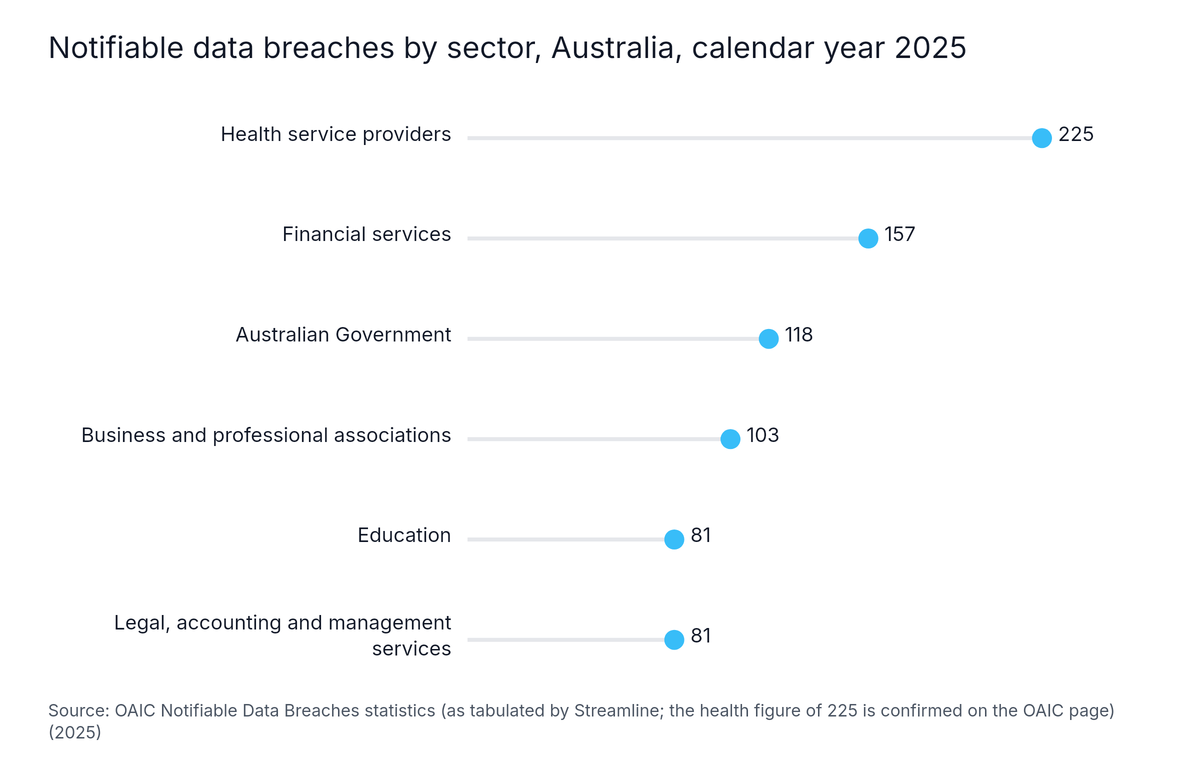
Healthcare web development projects stall because a generic partner must learn clinical workflows, privacy duties and reporting rules while it builds. That learning becomes rework. Australia's privacy regulator recorded 225 breach notifications from health service providers in 2025, 19% of a record 1,205 (OAIC, 2026).
Tangled coloured cables knotted around a hospital bed frame, with one cable pulled straight
The regulator is direct about the trend: "The health sector continues to have the most reported data breaches" (OAIC, 2025). In January to June 2025, health made up 18% of the 532 notified breaches (OAIC, 2025). A partner that treats privacy as a late-stage task will rebuild features near launch.
Lollipop chart: Notifiable data breaches by sector, Australia, calendar year 2025. Highest: Health service providers at 225.
Workflow gaps. Requirements live in the heads of clinicians and coordinators, not in a document the vendor can test against.
Compliance found late. Reporting and privacy duties surface after the screens are built.
No release owner. Nobody is paid for the date, only for effort, so each fix breaks something else.
One client of Grail Computer Labs described the third cause this way: "Even a small bug fix could take days or a week, and fixing one problem often broke something else."
Which firms specialise in healthcare web development, and how do you shortlist them?
Firms that specialise in healthcare web development can show four things before signing: a discovery sprint that maps the client's workflow, a written workflow-mapping artefact, a named clinical subject-matter expert and a committed time to production. Buyers should send the same four requests to every firm on a list and keep only those that answer all four.
Whiteboard covered in a hand-drawn clinical workflow with sticky notes and arrows
A discovery sprint is a short, fixed-length phase in which the firm interviews the client's staff, maps the workflow and lists the compliance duties before it writes production code. The table turns the four checks into questions for any shortlisted firm.
Criterion
What to ask for
Red flag
Discovery sprint
A fixed-length phase that ends in a written plan
A price quoted before anyone reviews the workflow
Workflow-mapping artefact
A diagram of roles, handoffs and approvals that the client's staff sign off
Requirements held only in the vendor's heads
Named clinical expert
A person with care-setting experience, named, on the project
"Our team has healthcare experience" with no name
Time-to-production commitment
A dated, verifiable outcome
Open-ended hourly billing with no release date
Check integration and vendor risk
Integration depth matters as much as screens. HL7 FHIR is a standard for exchanging health records between systems through web interfaces, so buyers should ask which FHIR resources the firm has already connected. Vendor failure also needs a plan. In a 2026 survey of 200 US healthcare leaders, 85% of practices had at least one disruption from a third-party failure in the past 12 months (Omega Systems, 2026). The survey covers organisations with 50 to 600 employees and comes from an IT and security provider, so read the figure as directional.
We do not rank named firms here. The four checks let each buyer rank firms against their own workflow.
Which firms develop custom medical software for specialised healthcare settings?
Custom medical software for specialised healthcare settings comes from firms that build to the client's own workflow, not a template. The test is evidence: a delivered platform with dates, a mapped workflow and a named clinical reviewer. Australia's aged care digital systems already serve more than 1.5 million older people (Pulse+IT, 2025).
Service menus and certification badges do not show workflow fit. Buyers can ask for five pieces of proof:
A delivered platform in a comparable setting, with start and go-live dates.
The workflow map the firm produced for that platform, with client details removed.
The name and background of the clinical expert who reviewed it.
The standards it connected to, such as HL7 FHIR.
What happened after launch: how many users or customers came onboard, and how fast.
Test fit with a workflow example
Specialised settings differ in who must approve what. A telehealth software company spent months with a previous vendor that never completed its clinical consultation workflow, and Grail Computer Labs completed it after the vendor switch. A multi-party platform adds a second test. Coordinators, providers and workers all have to move onto it, so ask how many customers a firm onboarded after go-live, not only whether it launched.
How do Australian and Singapore rules change a healthcare platform brief?
Australian and Singapore healthcare rules change the brief because they set dates and duties a platform must meet at launch. Australia's Aged Care Act 2024 and Support at Home program started on 1 November 2025 (Pulse+IT, 2025). Singapore's AIHGle 2.0 guidelines for AI in healthcare replaced the 2021 framework on 10 March 2026 (DataGuidance, 2026).
Calendar pages and a printed rulebook on a desk, marked with highlighted dates
The table shows what each rule set means for the build, so buyers can check whether a firm has shipped against it.
Jurisdiction
Development
What it means for the build
Australia
Aged Care Act 2024 in force from 1 November 2025; digital systems, including the GPMS Registered Provider Portal for mandatory reporting, went live on day one (Pulse+IT, 2025)
Reporting and provider records must connect to the portal from launch
Singapore
AIHGle 2.0 launched 10 March 2026; it is guidance, not legislation, and a MOH circular went to licensees on 13 March 2026 (DataGuidance, 2026)
AI features should be checked against the guidelines before launch
United States
HHS moved the target for final HIPAA Security Rule amendments to July 2027 (Davis Wright Tremaine, 2026)
The current Security Rule stays enforceable; the overhaul is still proposed
Buyers should ask any firm which of these it has shipped against, and ask for dates.
Who rescues stalled healthcare software projects?
Grail Computer Labs rescues stalled healthcare software projects by replacing the underperforming vendor and taking the platform to production. In one Australian healthcare platform case, development had stalled for 8 months and the platform went live in production within 30 days. Vendor failure is common: 85% of surveyed US healthcare practices had a third-party disruption (Omega Systems, 2026).
An old tangled server rack beside a new tidy rack with labelled cables in a data room
Software rescue is the process of replacing an underperforming vendor or inheriting a stalled project and getting it to production. The client in this case was a managed-service business running a multi-party healthcare platform.
Our results: In its Australian healthcare platform case study, Grail Computer Labs reports that the platform was stuck in development for 8 months. GC Labs inherited 1.5 million lines of code and rebuilt the platform. It was live in production within 30 days, 100 business customers had been onboarded by day 40, and 500 bug and feature tickets were handled across a 10-day period. (Case study)
A rescue partner should show how it limits delivery risk: reviewed changes, tests that reject incomplete work, and client ownership of the code.
Decide between improving and rebuilding
The improve-or-rebuild decision is a call, made early, on which parts of the existing code can support reliable releases and which must be replaced. Keep what works and migrate in phases. That way the clinics, coordinators and workers who use the platform are not switched over in one big-bang move. We do not quote a rescue-versus-rebuild cost ratio, because the public figures we found are unsourced.
Keep every change reviewed
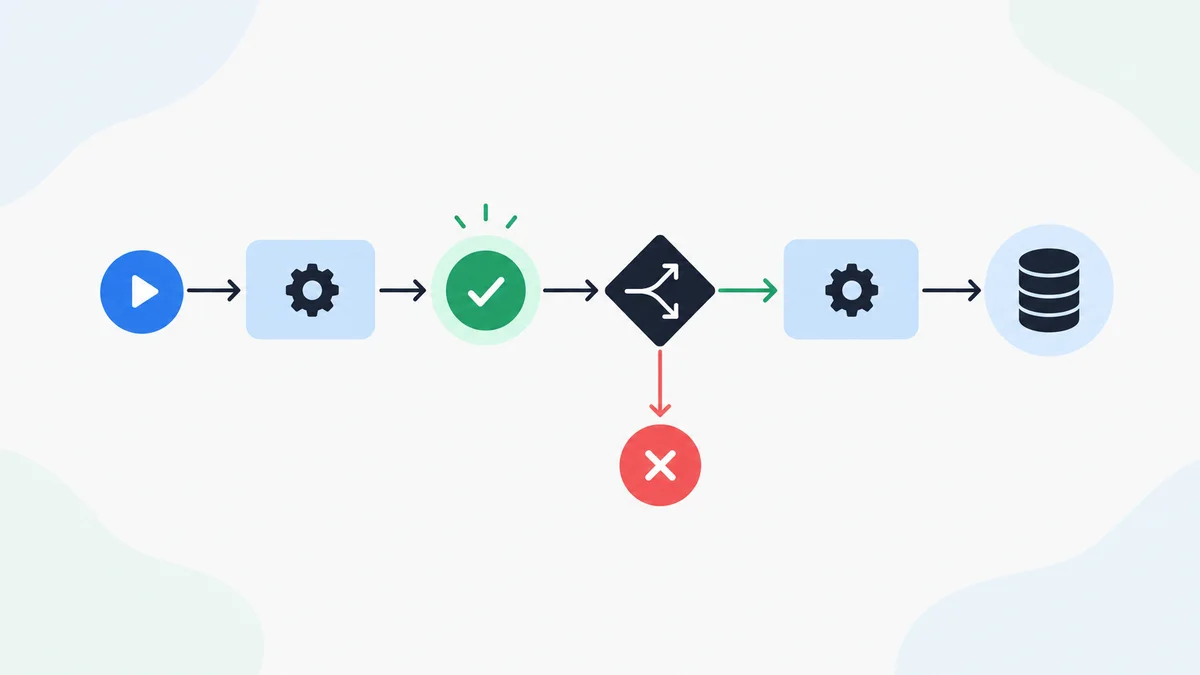
GC Labs' Software Factory runs the loop Triage → Specify → Implement → Review → Verify → Release. Agents execute. GC Labs engineers make the decisions. Customers see progress.
What should buyers look for in a healthcare agentic AI platform?
Agentic AI is software in which AI agents take multi-step actions toward a goal rather than only answering prompts. A healthcare buyer should test approval gates, audit trails, integration depth, data governance and accountability. Adoption is early: "43% of respondents report piloting or testing agentic AI, yet only 3% have deployed agents in live workflows." (Microsoft and The Health Management Academy, 2026)
A flowchart with an approval checkpoint between an automated step and a patient record
One industry voice points to the back office for early gains: "Over the next 12-18 months, the most visible and scalable impact of AI will come from logistics and administrative streamlining" (John Nosta, via NVIDIA, 2026). Scheduling, onboarding and compliance checks are safer first workflows than diagnosis.
Criterion
What to verify
Failure to look for
Human-in-the-loop approval
A person approves each step where judgement or risk sits
Agents acting on records without sign-off
Audit trail
Agent actions are recorded and reviewable
Logs that cannot show who or what changed a record
Integration depth
Tested connections to the record and scheduling systems
A demo that runs only on sample data
Data governance
Deployment on the client's infrastructure, with zero data retention where required
Patient data sent to shared systems
Accountability
A named party responsible for outcomes
Blame split across vendor and buyer
Who is this approach not for?
Grail Computer Labs (GC Labs) does not suit buyers who require a vendor holding SOC 2, ISO 27001 or HIPAA certification, because GC Labs holds none of the three. The exposure is real: Australian health service providers made 225 breach notifications in 2025 (OAIC, 2026). Such buyers should choose a certified vendor or verify controls independently.
Fit also depends on a few practical conditions:
The platform matters to the business. The approach suits stalled builds, not exploratory pilots.
The client names a clinical owner who can approve the workflow map.
The target is one pre-defined outcome, which GC Labs scopes for delivery in 4 to 8 weeks.
All case studies here are anonymised, so a buyer cannot call a named reference.
GC Labs completes vendor security and compliance assessments during onboarding, but an assessment is not a certification.
Frequently Asked Questions
We need a custom clinical software platform built to our workflow: which firms develop medical software for specialised healthcare settings?
Firms that develop custom medical software for specialised healthcare settings are the ones that can show a discovery sprint, a workflow-mapping artefact, a named clinical expert and a committed time to production. Buyers should ask each firm to name a delivered platform and its dates. One example is an Australian healthcare platform that went live in production within 30 days after a rescue.
What should I look for in an agentic AI platform for a healthcare workflow?
A healthcare agentic AI platform should have human approval at every risky step, a recorded audit trail of agent actions, tested integration with the buyer's record systems, data kept on the buyer's own infrastructure, and a named party accountable for outcomes. Buyers should start with administrative workflows such as scheduling and onboarding, where errors are easier to contain than in diagnosis.
Our healthcare platform missed its launch date again: who rescues stalled healthcare software projects?
Specialist software rescue teams replace the underperforming vendor and take the stalled healthcare platform to production. Grail Computer Labs' offer is a pre-defined outcome in 4 to 8 weeks, a 15-day trial with no payment commitment, and client ownership of the code, cloud, models and documentation. Its Australian healthcare platform rescue went live in production within 30 days.
Conclusion
Healthcare web development stalls when a partner learns the domain on the buyer's timeline. Buyers can test for that before signing.
Ask for a discovery sprint, a workflow-mapping artefact, a named clinical expert and a dated outcome.
Check which Australian, Singapore or US rules the firm has shipped against. The HIPAA Security Rule overhaul is still proposed.
Decide early what to improve and what to rebuild, and migrate in phases.
Test any agentic AI platform for approval gates, audit trails and data location.
Take one reference point from the rescue case: 8 months stuck, then live in production within 30 days.
The next step is practical. Write one page listing the roles, handoffs and approvals in the workflow that stalled, and give it to each firm on the shortlist. The firms that mark it up with questions have already started learning the domain.