Blog
Software Development Project Rescue: What the First 30 Days Involve
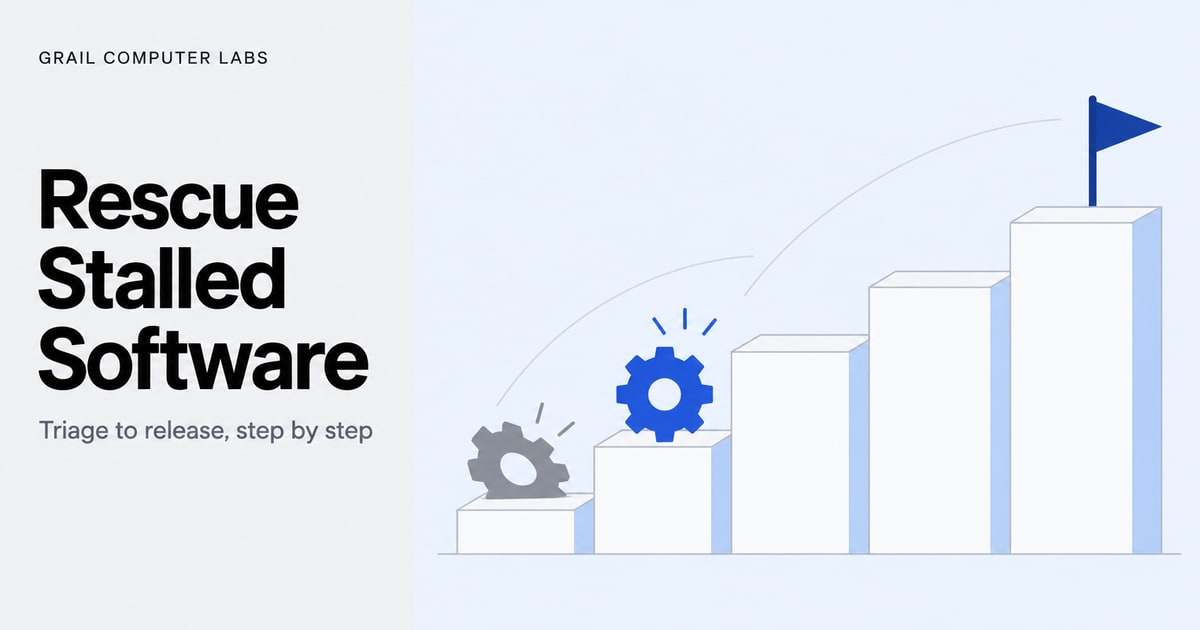
How software development project rescue works: triage, codebase inheritance, outcome agreement, stabilisation and release, anchored in a real 30-day case.
A legacy system is software that is hard to change safely. See the warning signs, the improve-or-rebuild test and a phased migration plan for real platforms.
How software development project rescue works: triage, codebase inheritance, outcome agreement, stabilisation and release, anchored in a real 30-day case.
Enterprise AI guardrails explained: instruction-based vs architecture-based controls, plus a go-live checklist for data access, action scope and fallback.

Legacy platform blocking AI or integrations? Decide what to keep, wrap, migrate or retire, then move in phases without stopping the business. Worked example.
Request a quote and our experts will contact you within 24 hours with tailored solutions and pricing.
Last updated: Nov 7, 2026
By Shiva Mangal of Grail Computer Labs, an applied-AI and digital product research lab that rescues and re-platforms stalled software.
A legacy system is any software platform a business still depends on that has become hard to change safely, because releases break things, nobody fully owns the code, or it cannot connect to modern tools such as AI.
Age is not the test. In a Wakefield Research survey of 945 CIOs and CTOs fielded in August 2026, 84% said they had cancelled an AI pilot or project because of limits in their legacy systems (GFT Technologies, 2026). GFT commissioned the research, so we treat it as vendor research. The platform did not fail because it was old. It failed to ship. This guide answers what is a legacy system, then starts at the moment one hurts: a blocked AI feature, a flagged audit or a stalled growth plan. It covers a diagnostic, the improve-or-rebuild decision, phased migration and the work to finish before any move.
Key Takeaways
- A legacy system is defined by behaviour, not age: unreliable releases, missing tests, no named owner and no usable API.
- The improve-or-rebuild decision rests on release history, tests, data ownership and regulatory deadlines, judged module by module.
- Phased migration keeps the old platform running while new components take over one slice at a time, each with an exit check and a rollback point.
- The strangler fig pattern fails when temporary wrapper layers become permanent, so each one needs an owner and a removal date.
- Pre-migration work (inventory, owners, tests, a written plan) decides whether a cloud move fixes a platform or only relocates its problems.
A legacy system is a software platform that a business still relies on but can no longer change safely or cheaply. Age is not the test: unreliable releases, missing tests, no named owner and no usable API are. GFT Technologies' chief executive said "For many organizations, legacy infrastructure is becoming a real constraint" (Marco Santos, GFT Technologies, 2026).

A legacy application is a single program that has become hard to change. A legacy system is the wider estate around it: the application, its database, its operating system, its integrations and the people who know how it works. Modernising the application alone often fails, because the estate around it keeps the same constraints.
Old software is not automatically a problem. A stable program that releases cleanly and exposes an API can run for decades. A newer platform built on workarounds, with no tests and one developer who understands it, can behave as legacy within a year or two.
The cost shows up as technical debt. Technical debt is the accumulated shortcuts and deferred maintenance that make each future change slower and riskier. Debt is a better lens than age because teams can observe it. They can count failed releases, untested modules and undocumented integrations. Counting years tells them little.
A platform is legacy when it fails behavioural tests. Five questions work as a self-diagnostic: can the team release without fear, do tests catch regressions, does a named owner understand the code, can other systems call it through an API, and can a bad release be rolled back? Failing two or more is a working sign of legacy.
| Check | Healthy sign | Legacy sign |
|---|---|---|
| Release confidence | Releases ship on a known schedule and rarely need a fix | Releases are delayed, rushed or followed by hotfixes |
| Test coverage | Automated tests fail when behaviour breaks | Nobody can say what a change will affect |
| Ownership | A named person or team understands each module | The people who built it have left |
| Interfaces | Other systems call it through a documented API | Integrations rely on database access or manual exports |
| Rollback | A bad release can be reversed in minutes | Rollback means restoring from backup and hoping |
The interfaces row matters most for AI. Integration complexity with legacy systems was cited by 48.6% of technology decision-makers as a blocker to further AI adoption (Codeninety, 2026). That survey covered 142 technical leaders, so it is a small vendor sample. It still shows the pattern: a platform that other systems cannot call is a platform AI cannot use.
A client quoted in a Grail Computer Labs case study described what failing these checks feels like: "Even a small bug fix could take days or a week, and fixing one problem often broke something else." (Grail Computer Labs client, case study, 2026). That sentence describes missing tests and unclear ownership, not old technology.
Most teams run this diagnostic only after something forces it. Grail Computer Labs' list of buying triggers names these moments:
Each trigger turns a background annoyance into a dated business risk. That is when migration stops being an IT preference and becomes a plan with a deadline.
Legacy systems block AI because models need clean data, callable interfaces and safe release paths that fragile platforms cannot provide. In the 2026 Housemark survey of 66 UK social housing providers, 48% named legacy systems as a barrier to AI (Housemark, via Housing Digital, 2026). The sample is small, so read it as directional.
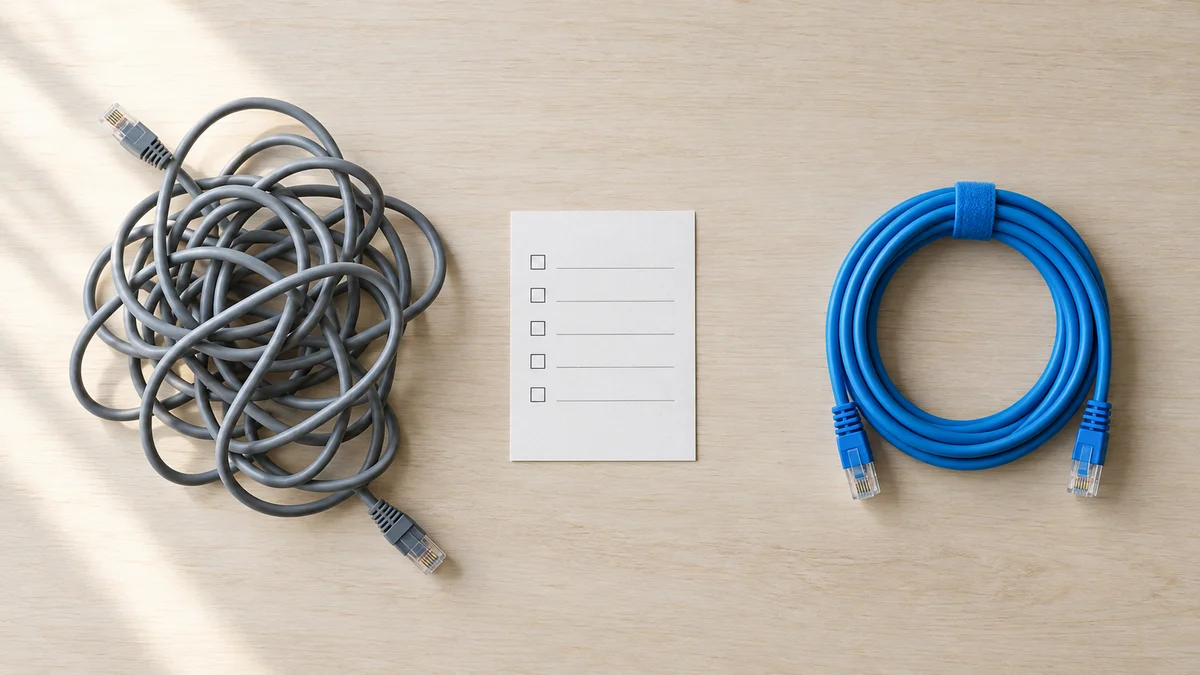
In that survey, skills shortages ranked first at 53%, legacy systems second at 48%, and data quality and budget constraints tied at 39% each (Housemark, via Housing Digital, 2026). Legacy sits near the top, but it never stands alone.
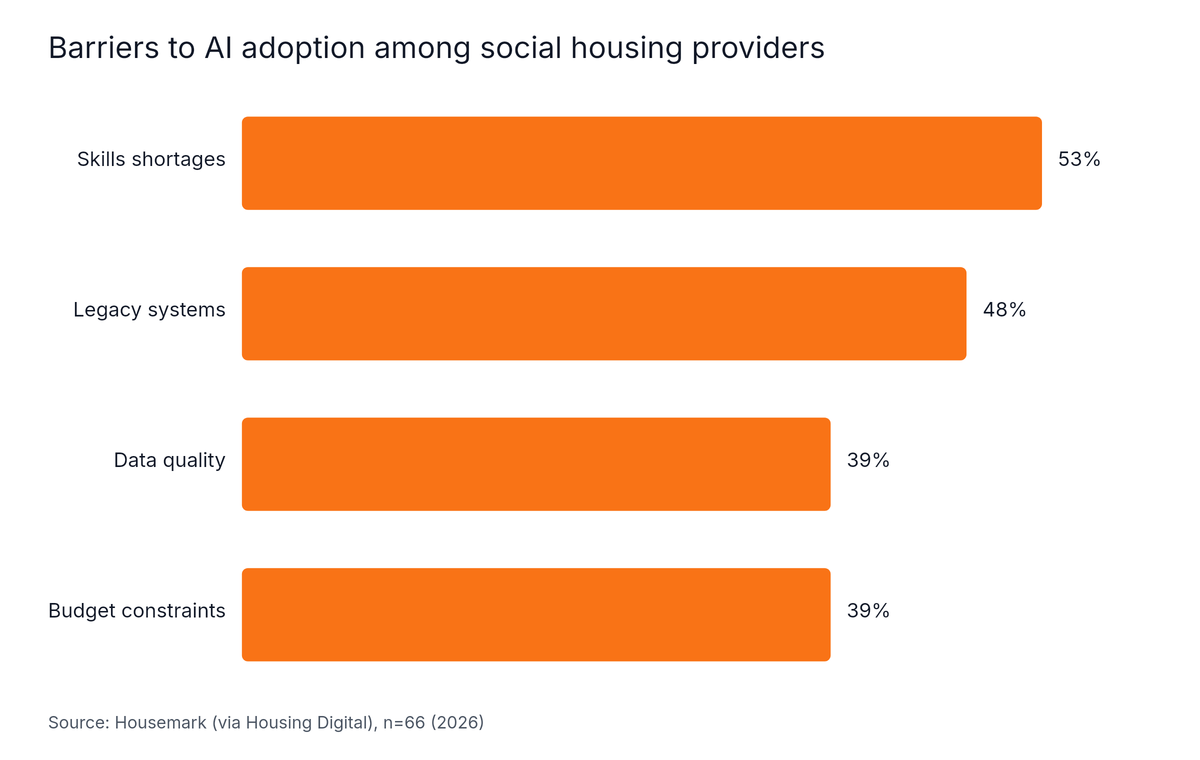
Source: Housemark (via Housing Digital), n=66, 2026
The mechanism is simple. An AI feature needs to read data, call business functions and ship updates often. A legacy platform may hold data in formats only the old code understands, expose no API, and take weeks to release a small change. The feature is feasible on paper and impossible in the release pipeline.
Audits and deadlines add a second kind of pressure. Australia's new Aged Care Act took effect on 1 November 2025, and Government Provider Management System (GPMS) updates went live on 3 November 2025. Providers must align internal systems and reporting (Australian Department of Health, 2025). A platform that cannot change quickly cannot meet a date like that.
The improve-or-rebuild decision tests whether existing code can support reliable releases. If it can, keep it and migrate in phases. If every change breaks something else, or a regulatory date sits beyond what the code can meet, rebuild the affected parts. Australia's new Aged Care Act took effect on 1 November 2025 (Australian Department of Health, 2025), the kind of date that forces the choice.

Most guides present this choice as a vendor table of rehost, replatform and refactor. A better approach starts from evidence the team already holds. The improve-or-rebuild decision is a module-by-module judgement about how much existing code a team trusts. It does not choose a cloud provider or a language. The table sets out the signals GC Labs weighs.
| Signal | Points towards improving | Points towards rebuilding |
|---|---|---|
| Release history | Releases mostly succeed; failures have clear causes | Fixes routinely break unrelated features |
| Tests | Core flows have tests, or tests can be added without rewrites | No seams to test against; behaviour is tangled |
| Data ownership | Data is structured, documented and portable | Data is locked in formats only the old code reads |
| Interfaces | An API layer can be added in front | Logic is spread across screens, scripts and the database |
| Regulatory or customer deadline | The code can meet the date with targeted changes | The date cannot be met without changing the foundations |
| Team knowledge | Someone can explain how it works | Nobody can, and the vendor has gone |
Mixed answers are normal. In a mixed estate, keep the modules that score well and rebuild only the ones that do not. That is what makes the decision phased rather than all-or-nothing. One objection a client has raised is: "A big-bang migration feels very risky." The module-by-module approach answers it directly, because most of the platform keeps running while the weakest parts change.
Phased migration moves a legacy platform onto a modern stack in controlled stages, so the old system keeps serving users while new components take over one slice at a time. Each stage ends with an exit check and a rollback point. Progress stalls without plans: only three of the 10 critical legacy systems GAO flagged in 2019 had been modernised by February 2025 (GAO, 2025).

A rollback point is a state the platform can return to within minutes if a release goes wrong. The people who carry the risk of daily operations need the plan to remove that risk, not explain it away. A general sequence looks like this, with the check that lets each phase end.
| Phase | What happens | Exit check |
|---|---|---|
| 1. Stabilise | Add monitoring, fix the release path, freeze risky changes | A release can be rolled back |
| 2. Map | Inventory modules, data stores, integrations and owners | The people who run the platform have reviewed the map |
| 3. Wrap | Put an API layer in front of the old code | A new consumer can call it without touching internals |
| 4. Replace | Move one slice at a time to the new stack and run both in parallel | The slice passes tests and matches old behaviour |
| 5. Retire | Switch off old components and remove temporary layers | The old component carries no traffic |
Inside each phase, GC Labs' Software Factory runs the loop Triage → Specify → Implement → Review → Verify → Release. Agents execute. GC Labs engineers make the decisions. Customers see progress.
The strangler fig pattern is a migration method in which new components grow around the old system and take over its functions one at a time until the old system can be switched off. A team should not use it when the code has no seam to cut along, or when the system is small and close to retirement.
The pattern underpins phases 3 to 5 above. It has a cost that most explanations leave out. The wrapper layers that let old and new run side by side are temporary, yet they are real software that someone must run. The common failure is that these layers outlive the plan and become permanent. Give every temporary layer a removal date and an owner, and make phase 5 a written exit check, not an intention.
The pattern needs a seam, which is a place where a team can cut between old and new code without breaking either. If the code is a single tangled unit with no usable interface, a phased approach adds cost without adding safety. The same holds for a small system about to be retired. In those cases a contained rebuild is the honest answer.
Before migrating a legacy platform to the cloud, a team should agree the business outcome, inventory systems, data and dependencies, name an owner for each, add tests that record current behaviour, and write a plan with rollback points. This is Grail Computer Labs' own checklist, not a standard. For scale, the US Government Accountability Office reviewed 69 federal legacy IT systems in 2025 (GAO, 2025).
The GAO figure is context only. It describes the size of the problem in one government, not support for any checklist. This is a practical guide to cloud migration preparation, in the order GC Labs finishes the steps:
Lift-and-shift is moving an application to cloud servers as it is, with no change to its code or design. It can be the right first move when the platform is stable and the goal is a data-centre exit. It is the wrong move when the platform blocks AI or fails audits, because the same unreliable releases and missing interfaces arrive in the cloud intact. The bill changes. The behaviour does not.
Grail Computer Labs inherited 1.5 million lines of code from the previous vendor of an Australian healthcare platform that had been stuck in development for 8 months. The platform went live in production within 30 days. By day 40, 100 business customers had been onboarded, and 500 bug and feature tickets were handled across a 10-day period.
Our data: An Australian healthcare platform, run by a managed-service business (a non-IT service firm that runs a multi-party platform), was stuck in development for 8 months. GC Labs inherited 1.5 million lines of code. The platform went live in production within 30 days. By day 40, 100 business customers had been onboarded. 500 bug and feature tickets were handled across a 10-day period.
These outcomes are the company's own data, drawn from its published case study, and the client is anonymised by choice. The table lists what each figure reports.
| Figure | What the case study reports |
|---|---|
| 8 months | Time the platform had been stuck in development before the vendor change |
| 1.5 million lines | Size of the codebase inherited and rebuilt |
| 30 days | Time to live in production |
| 500 tickets | Bug and feature tickets handled across a 10-day period |
| 100 customers | Business customers onboarded by day 40 |
This is one engagement. It shows what a stalled platform can look like when the vendor changes and the outcome is agreed first. It does not show that every rebuild will move at this pace, and none of the figures speaks to cost. The same improve-or-rebuild decision applies to any platform, on its own evidence.
If a stalled platform sits behind a blocked project, GC Labs' outcome engagement starts with a 15-day trial with no payment commitment.
Legacy migration is the wrong first move when a platform releases reliably, when skills or governance block progress more than code does, or when a small system is about to be retired. In the 2026 Codeninety survey of 142 technical leaders, data privacy and governance (61.3%) and accuracy risk (54.9%) ranked above legacy integration (48.6%) as AI blockers (Codeninety, 2026).
That survey is a small vendor sample, so treat it as a counterweight, not a verdict. Legacy is one blocker among several. Check these limits before committing to a migration:
Before migrating a legacy platform to the cloud, agree the business outcome, inventory systems, data and dependencies, name an owner for each, add tests that record current behaviour, and write a plan with rollback points. This work shows what to improve, what to rebuild and what to retire, so the migration moves a working platform rather than a hidden problem.
A legacy application is a single program that has become hard to change, while a legacy system is the wider estate around it: the application, its database, operating system, integrations and the people who understand it. Modernising only the application often fails because the surrounding system keeps the same constraints.
No, a system is legacy because it cannot be changed safely, not because of its age. A stable older platform with tests, an owner and an API can run reliably for decades, while a recent platform full of workarounds and no tests can behave as legacy within a year or two.
A business modernises a legacy system without stopping operations by migrating in phases: stabilise releases, map dependencies, wrap the old code in an API, replace one slice at a time, then retire old components. The old system keeps serving users throughout, and every stage has an exit check and a rollback point.
When a legacy system loses vendor support, security patches and fixes stop, so every new vulnerability, compatibility change or regulatory update becomes the owner's own work. If nobody on the team understands the code, small changes slow down and risk rises, which is usually the moment to decide between improving and rebuilding.
A legacy system is a platform a business can no longer change safely. The signs are behavioural, and the business triggers are specific: a blocked AI feature, a flagged audit, an inherited platform or a date the code cannot meet.
We agree the outcome first, deliver it in 4 to 8 weeks, then keep shipping. If a fragile platform is holding up a commitment already made, Book a call ↗.
© 2026 grail.computer All rights reserved.