Open source
AgentOS platform layer
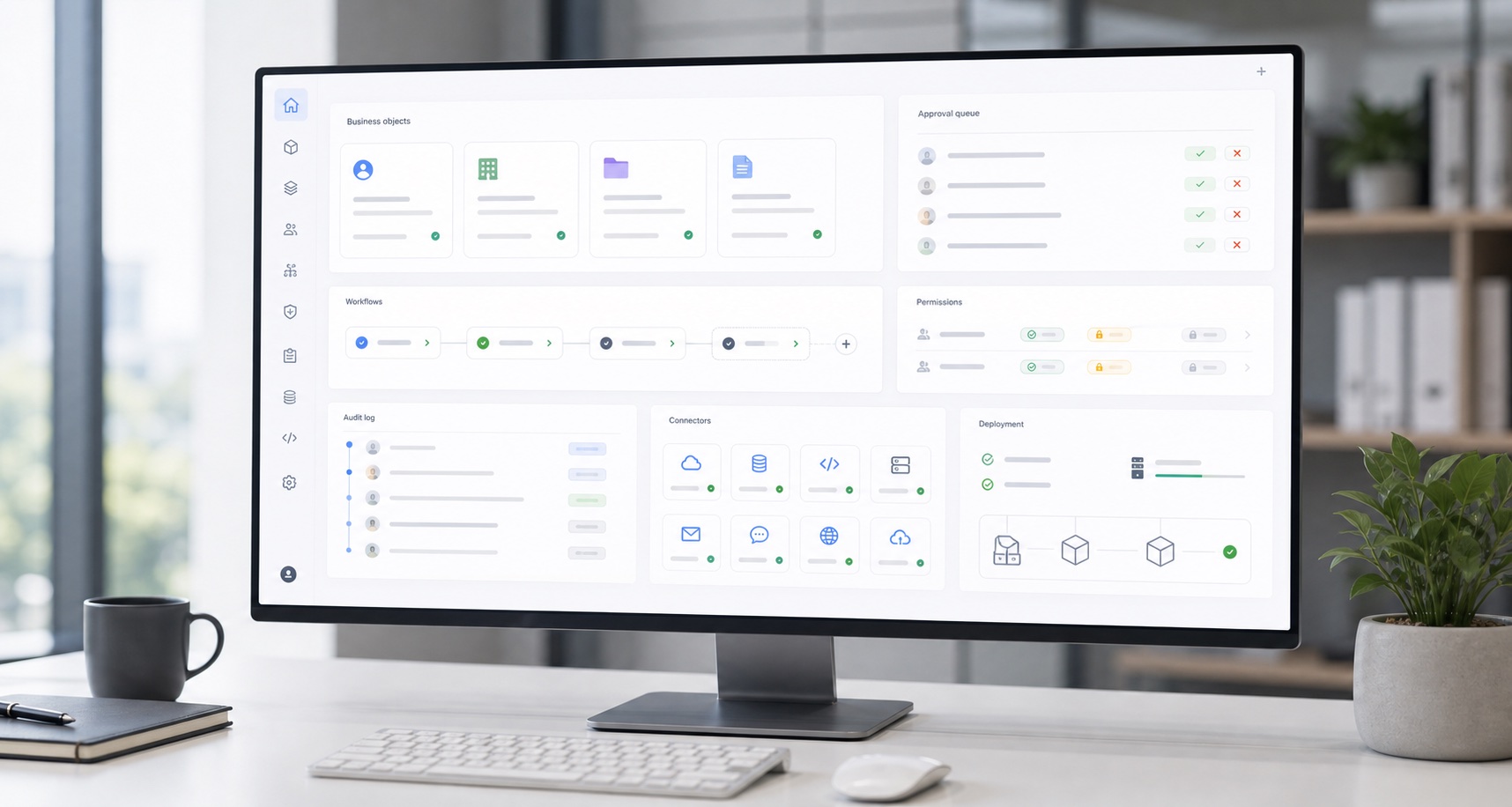
AgentOS is the platform layer behind Grail agents: long-running work, memory, files, tools, approvals, logs, permissions, and self-hosting.
The challenge
Companies cannot use AI safely in real business processes if the AI only lives in a chat window. They need agents, workflows, records, approvals, permissions, logs, and deployment control in one system.
What Grail built
Grail built the AgentOS/Grail AI OS direction around business objects, agents, workflows, API/MCP control, LLM routing, sandboxed execution, connectors, and egress controls.
 Frappe
 ERPNext
 FastAPI
 Docker Compose
 Temporaliron-proxy
Impact
The repo is a launch-candidate platform scaffold focused on architecture, governance, and self-hosted distribution readiness rather than customer adoption metrics.
Impact summary
| Primary result | Self-hosted direction |
|---|---|
| Operational result | Governed agents and workflows |
| Workflow scope | Launch-candidate scaffold |
How the workflow runs
The design is DB-first: customers edit apps, records, workflows, agents, prompts, and permissions through governed UI/API surfaces, with code bundles reserved for review and release paths.
- A user or system starts an agent task or workflow.
- The platform applies permissions, context, and tool boundaries.
- The agent or workflow performs the work through governed APIs.
- Approvals, logs, and records preserve the trail.
- Companies can run the stack in their own environment.
Human control
The control points were specific to the workflow, so the agent could speed up the work without silently taking over sensitive decisions.
- Approval gates for sensitive actions.
- Audit logs and task traces.
- Permissioned access to tools and data.
- Self-hosting path for stronger enterprise control.
What shipped
The implementation centered on these shipped pieces:
- Business object layer.
- Agent control plane.
- Workflow runner.
- API/control layer.
- MCP gateway.
- LLM proxy.
- Sandbox runner.
- Connector framework.
- Egress boundary.
- Self-hosted deployment path.