Fintech
Reducing SOP support inside a fintech operator
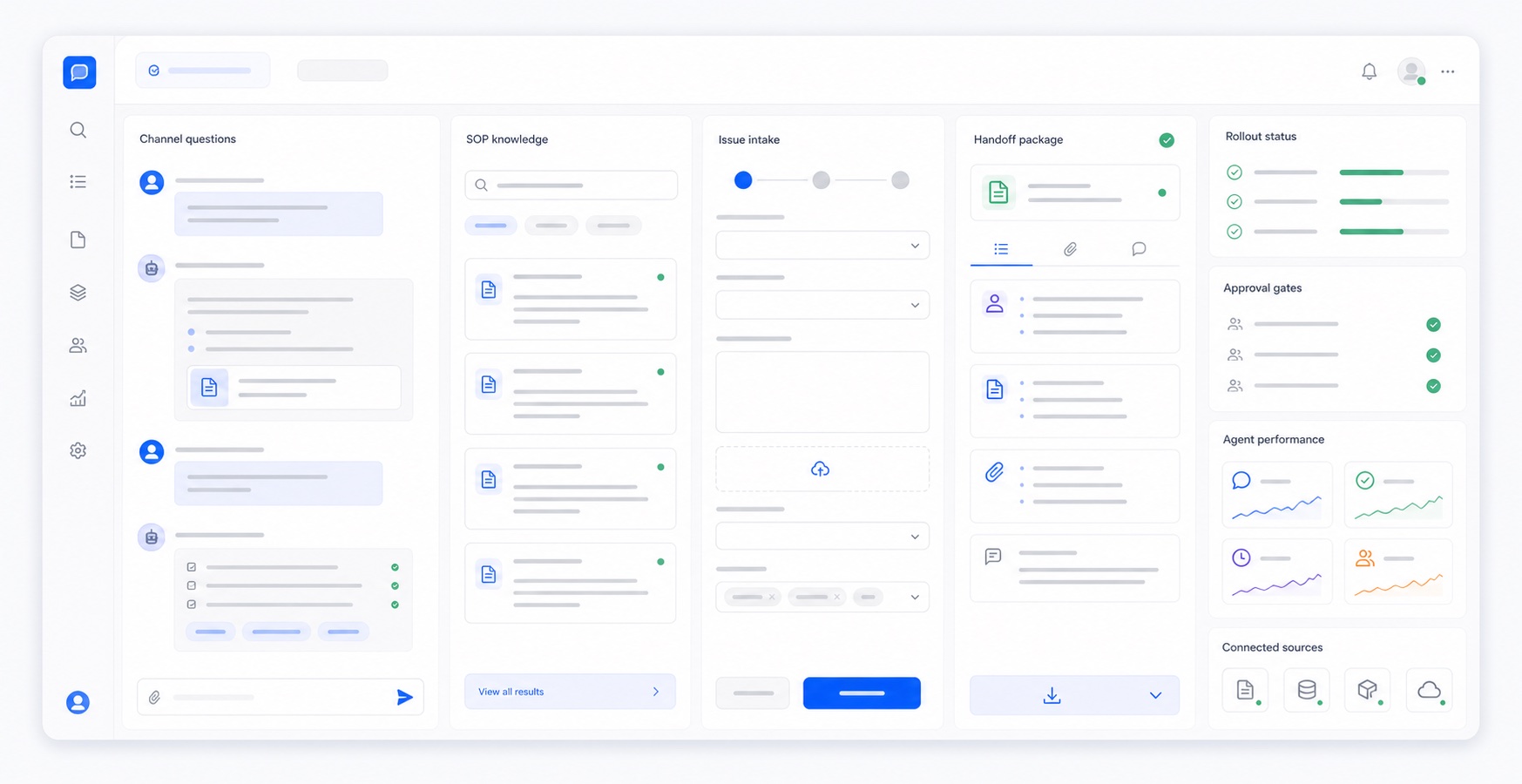
Operations questions were scattered across SOPs, team messages, and informal handoffs. Grail built a Teams-native agent lane to answer repeat questions and package messy issues for review.
The challenge
Operations work was happening inside messages, documents, and repeated support questions. The team needed faster answers from SOPs and a cleaner way to turn informal issues into tasks without giving an agent broad write access on day one.
What Grail built
Grail created a dedicated Teams lane with its own app package, document access path, deployment wrapper, and staged rollout. The first phase focused on read-only Q&A, issue intake, and structured handoff packages.
 Rust
Rust Microsoft Teams
 Graph API
 SharePoint
 Railway
 AWS ECR
Impact
The agent reduced repeated SOP support work and made product/vendor handoffs easier to package for review.
Impact summary
| Primary result | Teams-native workflow |
|---|---|
| Operational result | SOP Q&A |
| Workflow scope | Structured issue intake |
How the workflow runs
The rollout was staged deliberately: answer and collect first, then move toward task packaging and approval-gated writes after pilot review.
- A team member asks a question or raises an issue in Teams.
- The agent checks the relevant SOP or context.
- Simple questions are answered in the channel.
- Messy issues are converted into structured tasks.
- Product or vendor handoffs are packaged with the context needed for review.
Human control
The control points were specific to the workflow, so the agent could speed up the work without silently taking over sensitive decisions.
- Read-only support workflow first.
- Separate deployment boundary.
- Write actions can be added later behind approval.
What shipped
The implementation centered on these shipped pieces:
- Microsoft Teams AI agent.
- SOP Q&A over company documents.
- Issue intake from team messages.
- Structured product/vendor handoff packages.
- Dedicated deployment path.
- Read-only first rollout plan.