Open source
Spacetime workspaces
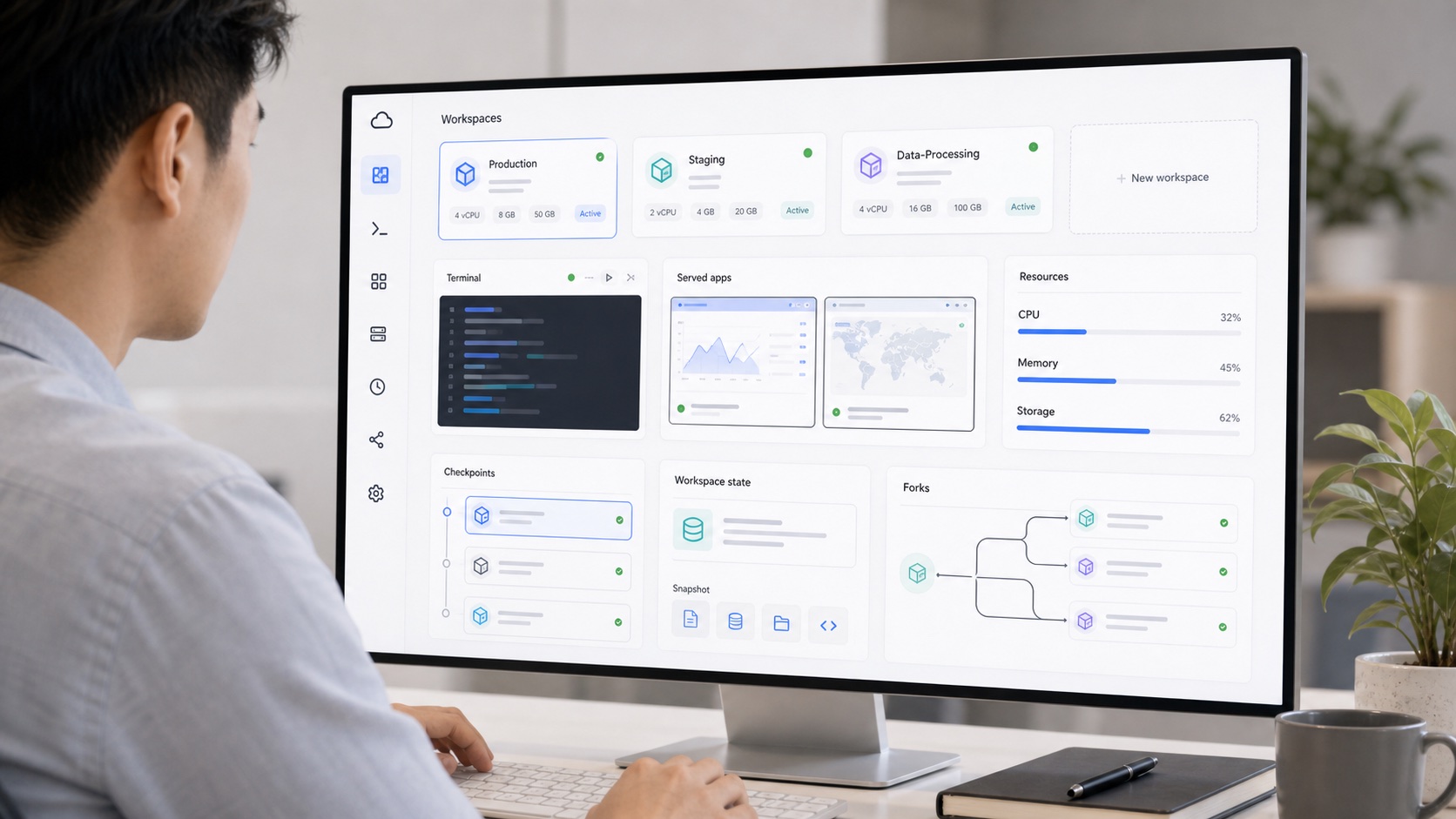
Spacetime is a persistent compute layer for creating workspaces, running commands, serving apps, checkpointing state, and forking environments.
The challenge
Agent workloads depend on compute environments that can outlive one command, stay inspectable, resume later, checkpoint before risky changes, and fork from a known-good state.
What Grail built
Grail built a Rust-first workspace system with microVM runners, copy-on-write volumes, control-plane APIs, gateway routing, admin visibility, and CLIs.
 Rust
Rust FirecrackerNBD
 Postgres
 MinIO
MinIO GCPCLI
Impact
The local repo includes CLI quickstarts, GCP deployment scripts, health checks, checkpoint and fork commands, and a read-only admin dashboard path.
Impact summary
| Primary result | Persistent workspaces |
|---|---|
| Operational result | Checkpoint and fork commands |
| Workflow scope | Controlled served URLs |
How the workflow runs
The system treats compute state as a first-class artifact: create a space, run commands, serve a URL, checkpoint before change, and fork from known-good state.
- A workspace is created for the task.
- Commands run inside the workspace, or an app is served from it.
- The state is checkpointed before risky changes.
- A stable state can be forked when needed.
- Status is inspected through the control plane or dashboard.
Human control
The control points were specific to the workflow, so the agent could speed up the work without silently taking over sensitive decisions.
- Compute state is treated as an artifact.
- Checkpoints reduce the risk of irreversible changes.
- Served URLs are routed through the control plane.
What shipped
The implementation centered on these shipped pieces:
- Workspace creation.
- Command execution.
- Served app URLs.
- Checkpointing.
- Forking from known-good state.
- Control-plane APIs and CLI.
- Read-only admin dashboard path.